Building and Engaging Your Food Live-Streaming Community: Chat Moderation and Interaction Tips
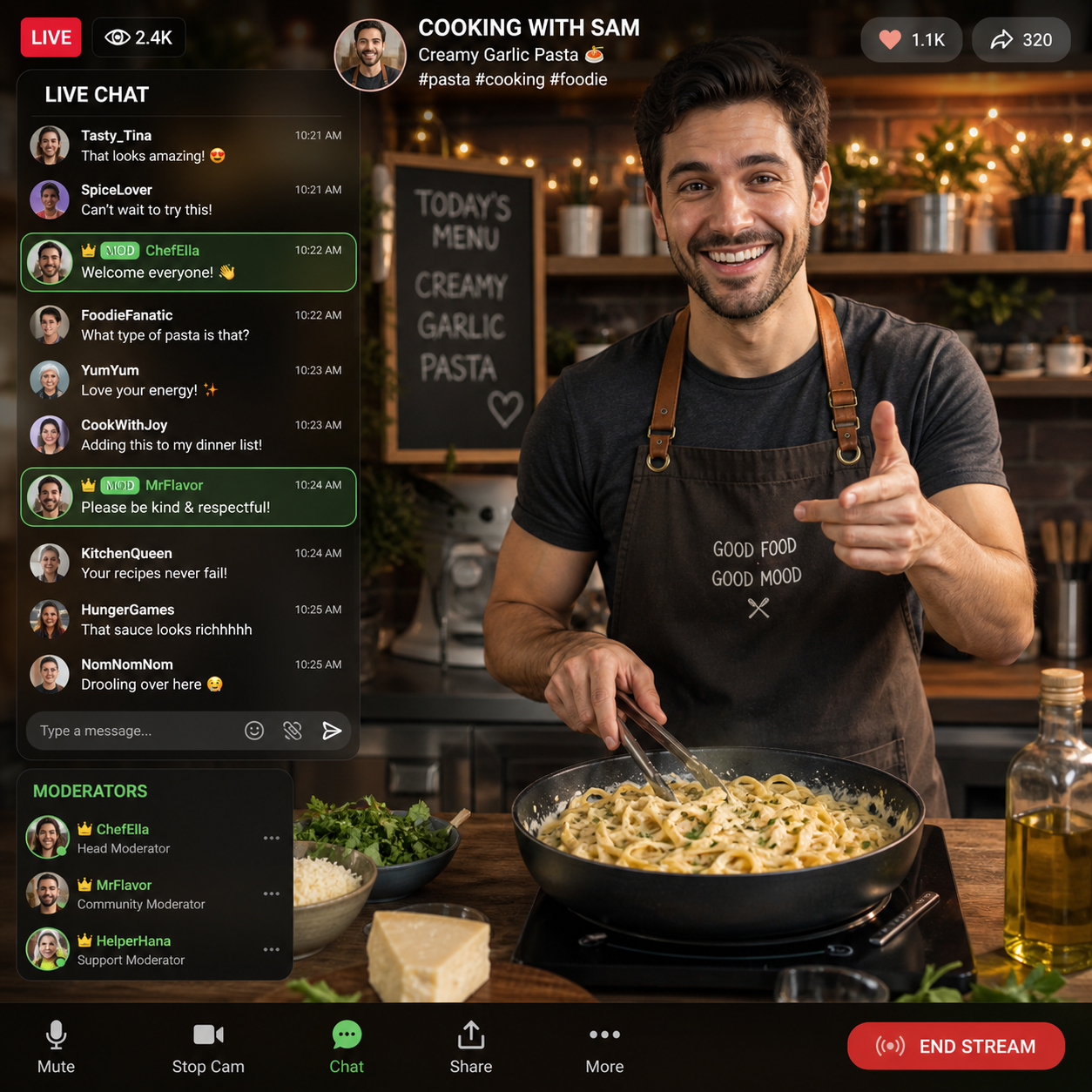
A successful food live stream depends on more than what appears in the pan. The live chat can become a lively kitchen table where viewers compare ingredients, ask cooking questions, share family traditions, and return because they feel known. Clear chat moderation and intentional viewer engagement create the conditions for that experience.
The goal is not to control every message. It is to protect a welcoming, food-focused space while giving the audience plenty of room to interact naturally.
Define the Community Experience You Want to Create
A food live-streaming community should feel welcoming, relevant, and safe for people with different cooking skills, diets, cultures, and opinions. Define that experience before you write rules or assign moderators, because viewers usually follow the tone the host sets.
Decide what you want viewers to feel when they arrive. Perhaps the stream is relaxed and humorous, highly instructional, focused on budget meals, or built around regional food traditions. Each format changes the kind of audience interaction that works best, but the foundation remains consistent: curiosity is encouraged, personal attacks are not.
Make space for beginners. A viewer asking how to dice an onion should receive the same basic respect as someone discussing advanced fermentation. Food conversations can also touch on allergies, religion, health, family identity, and cultural traditions, so moderators should prevent dismissive comments and avoid turning dietary differences into arguments.
A useful community promise might be: We talk about food with curiosity, credit people’s traditions, and help beginners learn. Repeat a shorter version during the opening minutes so new viewers understand the atmosphere without reading a long announcement.
Establish Simple Chat Rules Before Going Live
Effective community guidelines are short, visible, and specific about both acceptable behavior and consequences. Publish them before the food stream and pin a condensed version in the live chat so viewers can understand the boundaries in seconds.
Include rules that reflect the actual conversation in your channel:
- Respect people and food traditions: Debate techniques without insulting viewers, guests, or cultures.
- Keep comments relevant: Cooking questions, ingredient suggestions, taste comparisons, and meal-planning ideas are welcome.
- Protect personal information: Do not post private details about yourself or anyone else.
- Handle spoilers carefully: If the stream includes a recipe reveal, judging segment, or competition result, use a spoiler warning.
- Limit self-promotion: Do not advertise channels, products, restaurants, or links unless the host invites it.
- No spam, harassment, hate speech, or sexual comments: Repeated disruption and targeted abuse will be removed.
Explain the enforcement ladder in plain language. A minor off-topic message may receive no action, while repeated spam could lead to a timeout and harassment may justify an immediate ban. Consistency matters more than sounding severe. Viewers are more likely to trust rules when they know what happens next.
For broader safety principles, creators can also review guidance from [the United States Cybersecurity and Infrastructure Security Agency](https://www.cisa.gov/topics/cyber-threats-and-advisories), especially when planning account security and moderator access.
Build an Effective Moderation Workflow
An effective moderation workflow assigns clear responsibilities before the stream, monitors the live chat during the broadcast, and records important issues afterward. The basic sequence is notice, assess, respond, and escalate.
Before the stream
- Choose trusted moderators who understand the community guidelines.
- Share a short list of blocked words, recurring spam patterns, and sensitive topics.
- Agree on which issues require immediate action, such as threats, hate speech, or targeted harassment.
- Prepare standard responses for rules, recipe questions, links, and technical delays.
During the stream
Moderators should watch the pace and tone of the chat, not only individual words. One person might welcome viewers and surface good questions while another handles reports, spam, and disruptive behavior. On a small channel, the host may need to combine these roles, but asking a trusted volunteer to monitor chat can reduce distraction during knife work, hot-pan cooking, or detailed demonstrations.
Use proportionate actions:
- Message removal: Delete spam, personal information, graphic material, or clearly abusive comments.
- Reminder: Redirect a mildly off-topic or argumentative viewer without escalating the exchange.
- Warning: State the behavior that must stop and reference the relevant rule.
- Timeout: Temporarily restrict a viewer who continues disrupting the chat.
- Ban or report: Remove accounts involved in serious harassment, threats, hate speech, or persistent evasion.
Moderators should avoid public arguments. A brief message such as “Please discuss the technique without personal attacks. Further insults will result in a timeout” is usually more effective than a long defense of the host.
Encourage Conversation During the Stream
To increase audience interaction, ask specific food-related questions at natural points in the broadcast. Open-ended prompts, polls, Q&A sessions, and ingredient guesses give viewers an easy reason to type instead of passively watching.
Plan prompts around the stages of the stream:
- Before cooking: “What would you serve alongside this dish?” or “Which ingredient should we use first?”
- During preparation: “Do you prefer a chunky or smooth sauce?” and “What substitution would help you make this at home?”
- During tasting: “Should the next version be spicier, brighter, or richer?”
- Before closing: “Which recipe should we test next week?”
Ingredient polls work particularly well because they connect participation to a visible decision. Ask viewers to choose between two herbs, sauces, toppings, or cooking methods, then acknowledge the result and explain whether you will follow it. If the audience choice cannot work for practical reasons, say why. Pretending that every poll controls the outcome can weaken trust.
During a live Q&A, collect questions in themes rather than jumping randomly between topics. A moderator can label them as substitutions, equipment, storage, or technique. This keeps the host focused and helps viewers find useful answers.
Handle Common Chat Problems Calmly and Consistently
The best response to chat problems is calm, proportionate, and consistent. Remove clear abuse quickly, redirect minor disruption, and avoid allowing one argument to take over the food stream.
Spam and repetitive comments
People make spam because automated accounts, promotional users, and excited viewers can all produce repeated messages. Remove obvious advertising, links, and copy-pasted text; apply a timeout when repetition continues. Do not debate the spammer, since attention can encourage more disruption.
Arguments about food choices
Disagreement about pineapple, spice levels, vegan substitutions, or traditional preparation can be useful until it becomes personal. A moderator can write, “Different versions are welcome. Please explain your preference without attacking another viewer.” Then move the conversation back to the recipe.
Inappropriate remarks or harassment
Sexual comments, slurs, threats, and targeted harassment require firmer action. Delete the message, document the account if the platform permits it, and use a timeout, ban, or platform report according to severity. Do not ask the target to prove that the comment was hurtful in public.
Criticism of the host or recipe
Specific criticism can improve a stream. “The sauce looks too thin” may start a useful discussion, while “You cannot cook” is personal abuse. Thank viewers for actionable feedback, correct factual errors briefly, and ignore bait designed to provoke a reaction. Moderation protects the conversation; it should not erase every negative opinion.
Make Viewers Feel Recognized and Included
Viewers feel included when the host and moderators acknowledge their contributions without making newcomers feel like outsiders. Greet returning participants, welcome first-time viewers, and respond to useful comments by name when practical.
Small moments create strong community signals:
- Ask a returning viewer how last week’s recipe turned out.
- Thank someone who suggests an allergy-friendly substitution.
- Invite quieter viewers to vote without pressuring them to speak.
- Read a thoughtful comment aloud and explain how it affects the cooking process.
- Celebrate viewer photos, recipe adaptations, and meal-planning wins when they are shared with permission.
Recognition should not become a popularity contest. Rotate attention across the chat instead of replying only to the fastest or loudest participants. Moderators can collect unanswered questions and pass them to the host during pauses, giving slower typists and viewers in different time zones a fairer chance.
Use inclusive language around dietary needs. Ask whether viewers want vegetarian, halal, gluten-free, low-cost, or allergy-aware alternatives, while avoiding medical claims. Food live streaming becomes more welcoming when adaptations are treated as practical options rather than inconveniences.
Strengthen Engagement After Each Food Stream
Post-stream engagement improves when you review what viewers actually discussed and carry the strongest ideas into the next broadcast. After each stream, save useful questions, note repeated requests, and identify moments that generated genuine conversation.
A simple review can take 15 minutes:
- List the questions that went unanswered.
- Record which polls, prompts, or recipe stages produced the most responses.
- Flag moderation incidents and decide whether a rule or pinned reminder needs clarification.
- Choose one viewer suggestion for a future stream.
- Announce the next topic and invite specific preparation, such as choosing between two ingredients.
Share a short follow-up message with the final recipe notes, substitutions discussed, or answers that did not fit into the broadcast. This gives the live chat a useful afterlife and rewards viewers who contributed. When you use a suggestion, credit the viewer if they want recognition.
Do not judge the community only by message volume. A smaller chat with thoughtful questions may be healthier than a fast-moving room full of repeated reactions. Track returning participation, useful questions, poll responses, and the quality of discussion alongside raw viewer counts.
Frequently Asked Questions About Food Live-Stream Chats
What should the rules be for a food live-stream chat?
Rules should require respectful discussion, prohibit spam and harassment, protect personal information, limit self-promotion, and keep comments reasonably connected to the food stream. State consequences clearly and apply them consistently.
When should a moderator delete a comment or issue a timeout?
Delete comments containing harassment, threats, hate speech, private information, or disruptive spam. Use a timeout when a viewer continues breaking a rule after a reminder or warning. Serious abuse may require an immediate ban or report.
How can food streamers encourage more viewers to participate?
Ask specific questions tied to visible cooking decisions, run ingredient polls, invite substitution ideas, host focused Q&A sessions, and acknowledge helpful answers. Prompts work best when viewers can see how their responses affect the stream.
How should moderators handle arguments or criticism in live chat?
Allow specific, relevant criticism while stopping personal attacks. Acknowledge useful feedback, remind participants to remain respectful, and redirect the conversation to the dish or technique. Avoid public shaming and prolonged debates.
Is it better for a food streamer to moderate the chat alone or use a team?
Solo moderation can work for a small, slow-moving stream, but a trusted moderator team becomes valuable as chat speed and audience size increase. Even one additional person can monitor comments while the host focuses on cooking and audience interaction.