The Future of Food Live-Streaming: Trends to Watch in the Next 5 Years
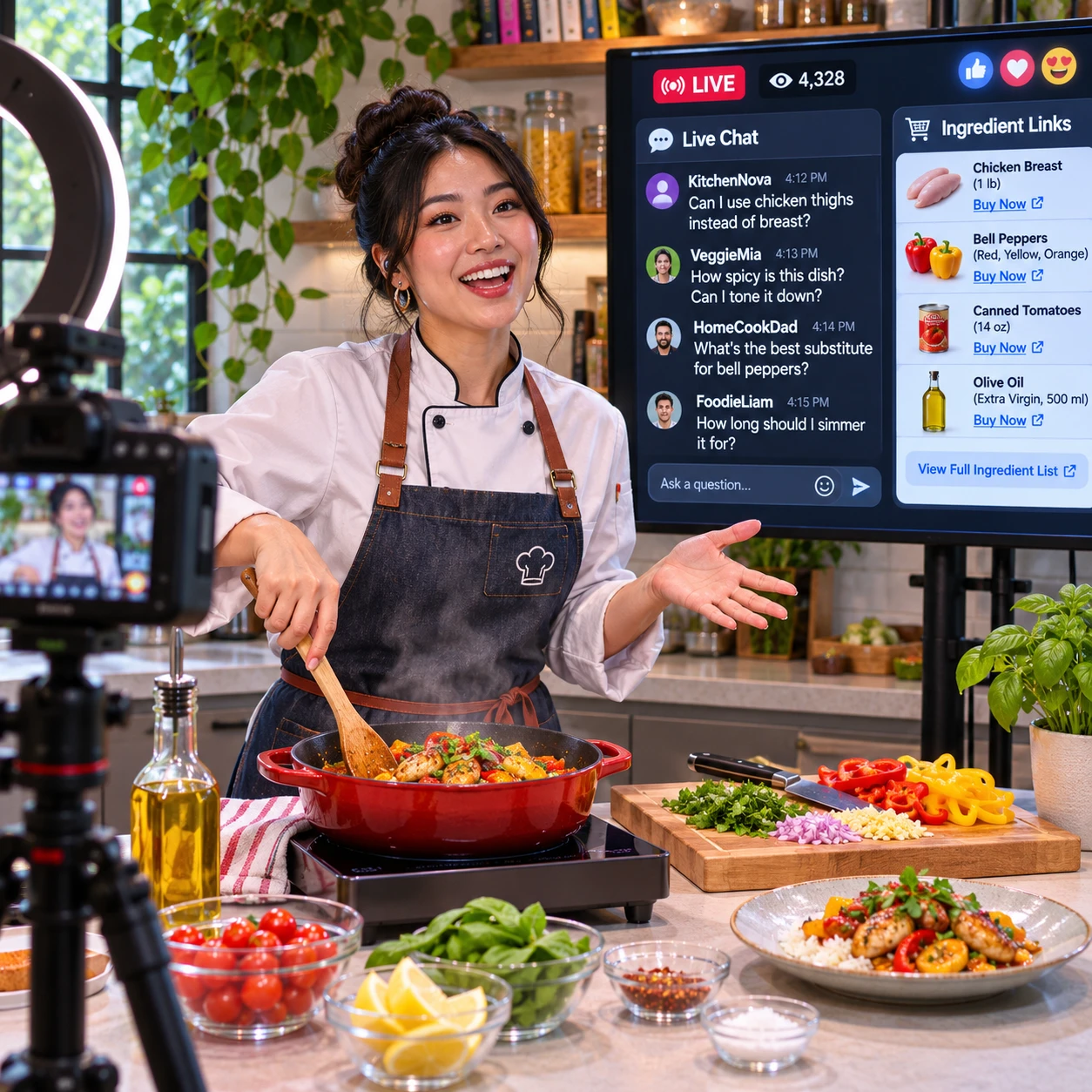
Food live-streaming already brings cooking demonstrations, restaurant events, product launches, and home-kitchen experiments to viewers in real time. Over the next five years, the format may become more interactive and easier to produce, while creators and businesses face familiar questions about trust, accessibility, and platform dependence.
These changes are possibilities, not guarantees. The most useful strategy is to build around what audiences value now: a clear point of view, practical food knowledge, and a reason to participate rather than simply watch.
Why food live-streaming is evolving
Food live-streaming is evolving because creators, viewers, and food businesses want more direct ways to share knowledge, build community, and discover products. Live video lets an audience see cooking decisions as they happen, then ask questions that a prerecorded recipe cannot answer in the moment.
A chef can explain how a sauce changes when it reduces; a home cook can show a low-cost weeknight meal; a restaurant can introduce a seasonal menu. For viewers, the appeal is often the process and personality, including small fixes and unexpected results, not just a polished final plate.
Streaming platforms have made live formats familiar, but their tools, recommendation systems, and shopping features can change. Food creators should treat a platform as a useful distribution channel, not the sole home of their audience. That distinction matters as viewing habits shift and businesses look for ways to turn attention into bookings, sales, or repeat visits.
More interactive cooking experiences
Interactive cooking experiences let viewers influence the session through questions, polls, and recipe choices. Over time, creators may build more formats around audience participation, though the host still needs to keep the cooking safe and the demonstration coherent.
Simple interaction is often more effective than trying to respond to every message. A cook might ask viewers to choose between two garnishes, invite questions about ingredient substitutions, or reserve a short Q&A after the main recipe. A regular audience could also vote on a future dish, then return to see the result.
- Use focused prompts: Ask one clear question at a time, such as which vegetable viewers have on hand.
- Set expectations: Tell viewers when you will read chat so that knife work, hot pans, or food-safety steps get your full attention.
- Keep participation practical: Invite substitutions and questions that help viewers cook, rather than letting the session become a stream of unrelated requests.
There is a trade-off: more interaction can make a broadcast feel personal, but it can also disrupt timing. A moderator or a planned pause for chat helps, especially during a busy restaurant service or a detailed demonstration.
Livestream shopping and food discovery
Livestream shopping connects a food demonstration with products or experiences viewers can explore while they watch. For food creators, that might mean showing a particular pan, spice blend, cookbook, meal kit, or ticketed tasting, where platform features and local rules allow.
The strongest format starts with something worth watching. A baker can compare doughs made with different flours and explain the texture; a restaurant can walk through a tasting menu and describe its ingredients. Product links may help interested viewers take the next step, but they should support the demonstration rather than dominate it.
Clear disclosures are essential when a creator earns a commission, receives a product, or is paid to feature a brand. Explain what is sponsored and distinguish personal experience from a claim that needs evidence. Food allergies and dietary needs also deserve careful treatment: show ingredient information where possible, and avoid implying that a product is suitable for everyone.
Shopping features may become more common, but availability varies by platform, country, and product category. Restaurants and small food businesses can begin with lower-friction options such as linking to their own menu, reservation page, or event details, then assess whether viewers actually use them.
AI and easier production workflows
AI-assisted production may reduce some repetitive work in food live-streaming, especially planning, captioning, translation, clip creation, and moderation. These tools can save preparation time, but they cannot reliably replace a host’s judgment about cooking accuracy, tone, or safety.
For example, an AI tool could help turn a recipe outline into a run sheet, generate captions, or identify a short segment for a follow-up clip. Translation tools might help a creator reach viewers who speak another language, although culinary terms and ingredient names need review. Automated moderation can flag abusive or unsafe comments, but it may also misread a harmless question or miss a subtle problem.
Use a human review step for anything that could mislead viewers: ingredient quantities, allergy details, food-safety instructions, translated captions, and sponsored claims. Test new tools on a short recording before relying on them during a live event. The benefit is a lighter workflow; the cost may be extra checking and occasional errors that require correction.
New viewing formats and platform habits
Food live-streaming will likely keep adapting to mobile viewing, short-form clips, and changing platform habits, while immersive formats such as virtual or augmented reality remain possibilities rather than certain mainstream outcomes. Creators should make content usable on a phone first and experiment with newer formats only when they improve the food experience.
Many viewers watch in short gaps or discover a creator through a clip before joining a full broadcast. A clear camera view of the cooking surface, readable ingredient labels, and an opening that quickly explains the recipe can help both live viewers and people who find an excerpt later. Short-form video also gives a livestream more than one chance to reach an audience, provided the creator has permission to repurpose and share the footage as needed.
Virtual or augmented reality could eventually help audiences explore a kitchen, market, or food event in a more spatial way. Yet a headset is not practical for every viewer, and a more immersive setup may raise production costs. For most food creators, a steady camera, good sound, and legible captions are more useful investments today.
Trust, accessibility, and creator sustainability
Trust, accessibility, and a sustainable schedule will shape whether food live-streaming communities last. Viewers need to understand what they are seeing, follow the content in different viewing conditions, and feel safe participating.
Captions help people who are Deaf or hard of hearing, viewers watching without sound, and audiences who are still learning the language. Check automated captions for ingredient names and measurements, and describe important visual steps aloud rather than relying on the camera alone. Keep text readable and avoid covering the food with overlays.
Moderation matters, too. Set basic chat rules, assign a moderator when possible, and decide in advance how to handle harassment, unsafe cooking advice, or spam. Product disclosures and honest descriptions of a recipe’s difficulty also help preserve credibility.
Consistency does not mean streaming every day. A realistic monthly or weekly schedule is more sustainable than a demanding cadence that leads to burnout. Plan for preparation, shopping, setup, and follow-up, not only the minutes spent on camera. A shorter, well-prepared session can serve viewers better than an overly long broadcast that strains the creator and team.
How food creators can prepare now
Food creators can prepare for future changes by testing manageable formats, learning what their audiences value, building relationships beyond one streaming platform, and reviewing results after each session. Start with experiments that can be repeated without a major equipment investment.
- Choose a clear promise: Decide whether the stream teaches a technique, answers cooking questions, previews a menu, or explores an ingredient.
- Test one format at a time: Compare a live demonstration, a viewer-voted recipe, and a short Q&A across several sessions. Note which prompts lead to useful conversation and repeat attendance.
- Make participation easy: Tell viewers what they need before cooking begins, and offer substitutions when practical.
- Keep a direct connection: With consent, invite interested viewers to follow a newsletter, website, or event list so a platform change does not erase the relationship.
- Review meaningful signals: Look beyond peak viewers. Consider watch time, questions asked, returning participants, link clicks, reservations, or sales that can reasonably be connected to the stream.
Small food businesses can begin with a phone, stable support, a quiet space, and a simple plan. A restaurant might stream a short seasonal dish demonstration outside its busiest service; a food brand could answer questions about how to use an ingredient. Keep the first sessions modest, disclose partnerships, and ask viewers what they want next.
The next five years may bring better tools and new ways to shop or participate. Creators who stay curious while protecting clarity, trust, and a manageable workload will be in the best position to adapt.
Frequently asked questions
What types of food content work well in a livestream?
Live cooking demonstrations, technique lessons, ingredient comparisons, recipe troubleshooting, restaurant menu previews, and audience Q&As work well when viewers can learn or participate. Choose a dish with steps that are visible and manageable on camera.
How might AI change food live-streaming?
AI may help creators plan sessions, generate or translate captions, find clips, and filter chat. Human review remains important for recipe details, food-safety guidance, allergy information, and translations.
Will livestream shopping become more common for food creators?
It may, particularly where platforms support product links or event sales, but adoption will vary. A useful demonstration and transparent product information should come before a sales pitch.
How can small food businesses start streaming?
Begin with a phone, a stable stand, clear sound, good lighting, and a short topic such as a dish demonstration or menu preview. Run a test, set a simple chat plan, and share the event with existing customers.
What challenges should food streamers plan for?
Plan for platform changes, moderation, unreliable connectivity, accessibility needs, sponsorship disclosures, and the time required to prepare. A backup plan and a realistic schedule reduce pressure when something goes wrong.